
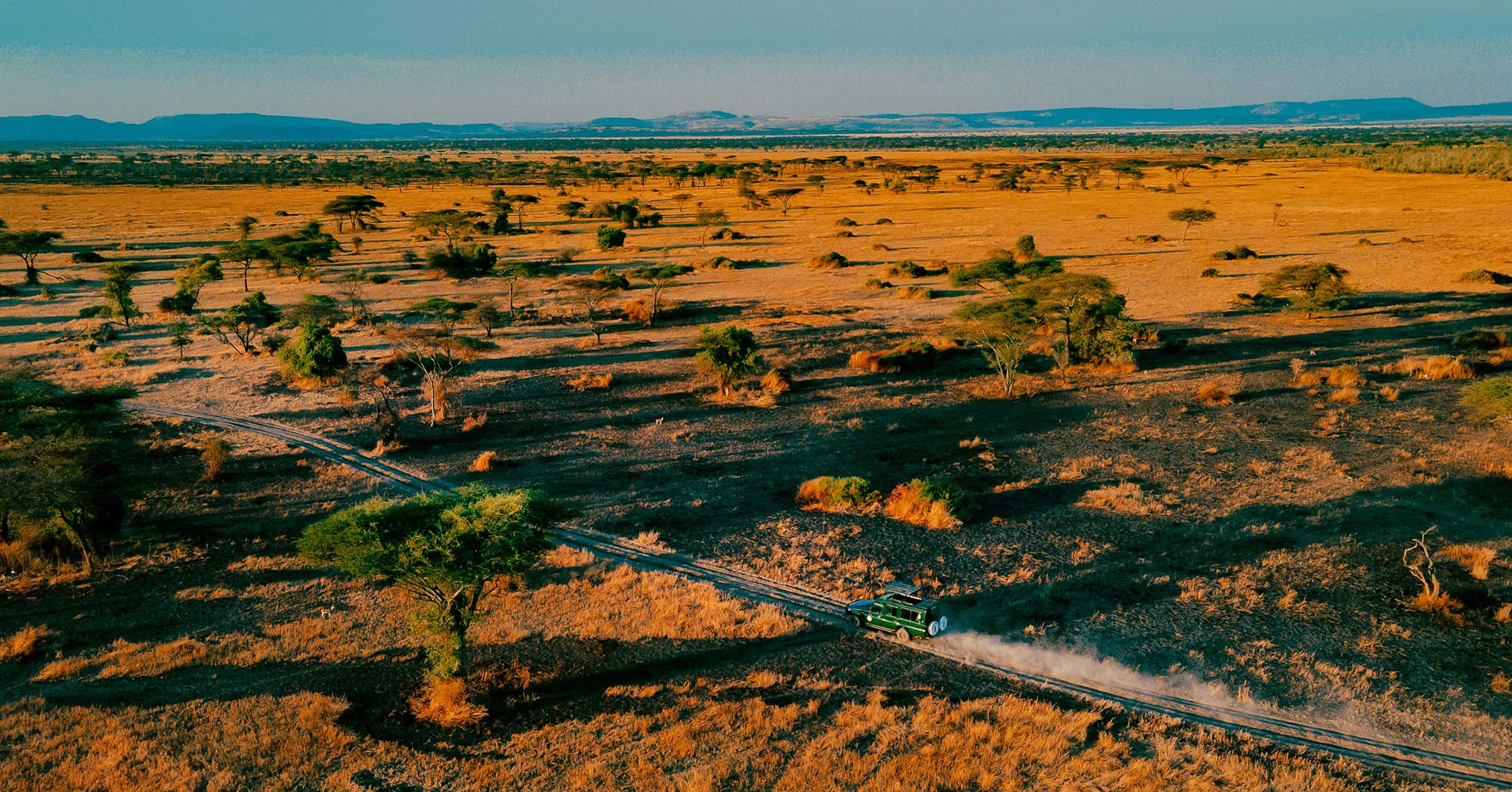
Serengeti National Park
Experience the raw majesty of Tanzania’s most iconic wilderness. Known to the Maasai as Siringet—the place where the land runs on forever—Serengeti National Park offers a safari experience that is both timeless and transformative. With Banana Africa Adventures, you don’t just observe the wild; you immerse yourself in an ecosystem where nature dictates the rhythm of life.
History and Facts about Serengeti National Park
The Serengeti’s journey from a hunting ground to a world-renowned sanctuary is a testament to global conservation. Originally set aside as a partial game reserve in 1930, the area was officially declared a National Park in 1940 to protect its unique biodiversity from increasing human pressure.
- Scale: The park covers roughly 14,763 $km^2$, forming the heart of the larger Serengeti ecosystem.
- Protection: In 1959, the eastern section was separated to create the Ngorongoro Conservation Area, allowing for a unique multi-use landscape.
- Conservation Success: Since 2005, the park has been part of a critical Lion Conservation Unit, supporting over 3,000 lions—the largest population in Africa.
Wildlife and Attractions in Serengeti National Park
The Serengeti is a high-density wildlife haven, famous for hosting the African Big Five (lion, leopard, elephant, buffalo, and rhino). Beyond these legends, the park is a sanctuary for an incredible array of predators and plains game.
- The Carnivores: Witness the speed of cheetahs on the open plains, spotted hyenas, and the rare African wild dog, which was successfully reintroduced in 2012.
- Biodiversity: The park supports over 500 bird species, including the Masai ostrich and the prehistoric-looking secretarybird, alongside diverse reptiles like the Nile crocodile.
- The Landscape: From the iconic granite kopjes (rocky outcrops) where lions often lounge, to the riverine forests and vast savannahs, the scenery is as diverse as the animals that inhabit it.
The Great Wildebeest Migration
The Serengeti is the stage for the world’s largest yearly wildlife migration, an epic 800 km trek that defines the ecosystem’s cycle of life. This “Great Migration” is a relentless search for green pastures and water.
- The Herds: Over 1.5 million wildebeest, 250,000 zebras, and hundreds of thousands of gazelles move in a synchronized rhythm across the plains.
- The Cycle: Between January and March, half a million wildebeest are born in the southern Serengeti/Ngorongoro region. By April, the herds head north, facing the ultimate test at the Grumeti and Mara Rivers.
- The Peril: In these river crossings, nearly 3,000 crocodiles wait. It is a raw display of survival where predation and the elements claim roughly 250,000 wildebeest annually.