
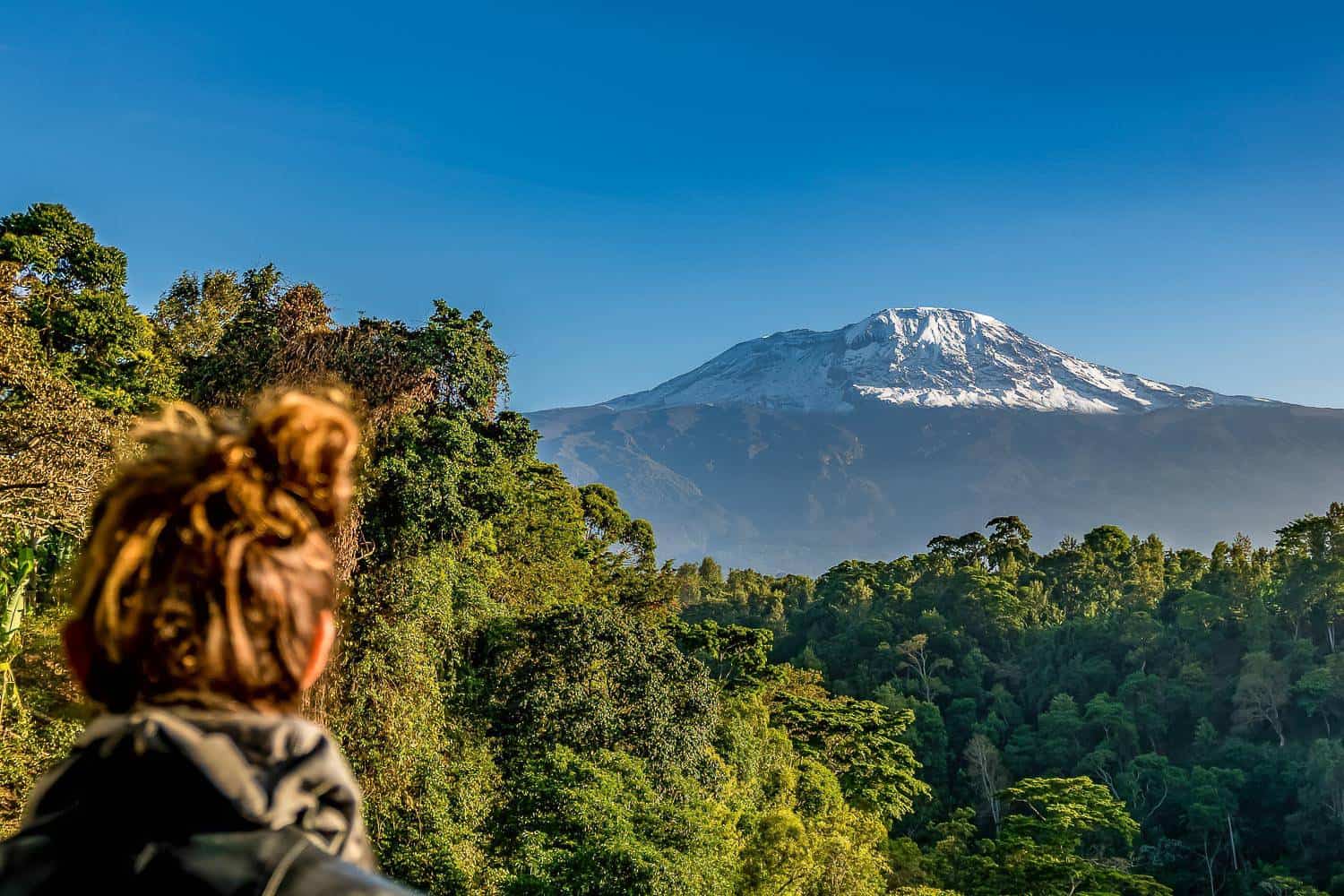
Kilimanjaro National Park
Ascend to the highest point on the African continent with Banana Africa Adventures. Kilimanjaro National Park is home to the legendary Mount Kilimanjaro, a world-renowned symbol of adventure and the tallest free-standing mountain on Earth. Whether you are an ambitious trekker aiming for Uhuru Peak or a nature lover exploring its montane forests, Kilimanjaro offers a majestic escape into the clouds. At Banana Africa Adventures, we combine expert logistical support with highly trained mountain guides to ensure your climb is safe, professional, and life-changing. Trust our authority to lead you through five distinct climate zones to the “Roof of Africa.”
History and Facts about Kilimanjaro National Park
Mount Kilimanjaro is a geological marvel steeped in history and mystery, serving as a beacon for explorers for centuries.
- Formation: Kilimanjaro is a stratovolcano comprised of three volcanic cones: Shira, Mawenzi, and Kibo. While Shira and Mawenzi are extinct, Kibo is dormant and could technically erupt again.
- Establishment: The mountain and its surrounding forests were gazetted as a game reserve by the German colonial government in the early 20th century. It was officially designated a National Park in 1973 and opened to the public in 1977.
- World Heritage: In 1987, the park was declared a UNESCO World Heritage Site due to its unique ecological systems and its status as a natural wonder.
- The Tallest Point: Uhuru Peak, standing at 5,895 meters (19,341 feet), was first successfully summited in 1889 by Hans Meyer and Ludwig Purtscheller.
- Climate Zones: A trek up Kilimanjaro is often described as walking from the equator to the North Pole in a matter of days, passing through cultivated land, rainforest, heath, alpine desert, and finally, an arctic summit.
Wildlife and Attractions in Kilimanjaro National Park
While most visit for the climb, the park’s lower reaches are a sanctuary for diverse flora and fauna, offering a unique “vertical” safari experience.
- Primate Life: The lush rainforest zone at the base is home to the striking Black-and-white Colobus monkeys, Blue monkeys, and olive baboons.
- Elusive Mammals: While difficult to spot in the dense forest, the park hosts elephants, Cape buffaloes, and leopards. The high-altitude moorlands are home to the resilient four-striped grass mouse and various duikers.
- Unique Flora: Kilimanjaro is famous for its endemic plant species, most notably the Giant Groundsels (Senecio kilimanjari) and Lobelias, which look like something out of a science-fiction novel against the volcanic landscape.
- Glacial Beauty: The summit of Kibo still holds remnants of ancient glaciers, though they are rapidly receding, making a visit to the “Snows of Kilimanjaro” a time-sensitive privilege.
The Great Wildebeest Migration
While the Great Migration takes place on the vast plains of the Serengeti, Kilimanjaro National Park serves as the dramatic, snow-capped backdrop that defines the geography of the entire Northern Tanzania circuit.
- The Geographic Connection: Kilimanjaro is the sentinel that watches over the plains of East Africa. Many travelers with Banana Africa Adventures choose to climb Kilimanjaro as a feat of endurance before heading to the Serengeti to witness the migration as a reward.
- An Ecosystem Link: The mountain’s runoff feeds the surrounding plains and swamps, such as those in Amboseli and nearby conservancies, which support the broader wildlife populations that interact with migratory routes.
- The Ultimate Contrast: There is no greater contrast in travel than standing on the arctic, frozen summit of Kilimanjaro and, just days later, witnessing 1.5 million wildebeest kicking up dust in the sweltering heat of the savannah.
- The “Grand Circuit”: For the ultimate Tanzania experience, we integrate the vertical challenge of Kilimanjaro with the horizontal spectacle of the Great Migration, providing a complete narrative of Africa’s natural extremes.