
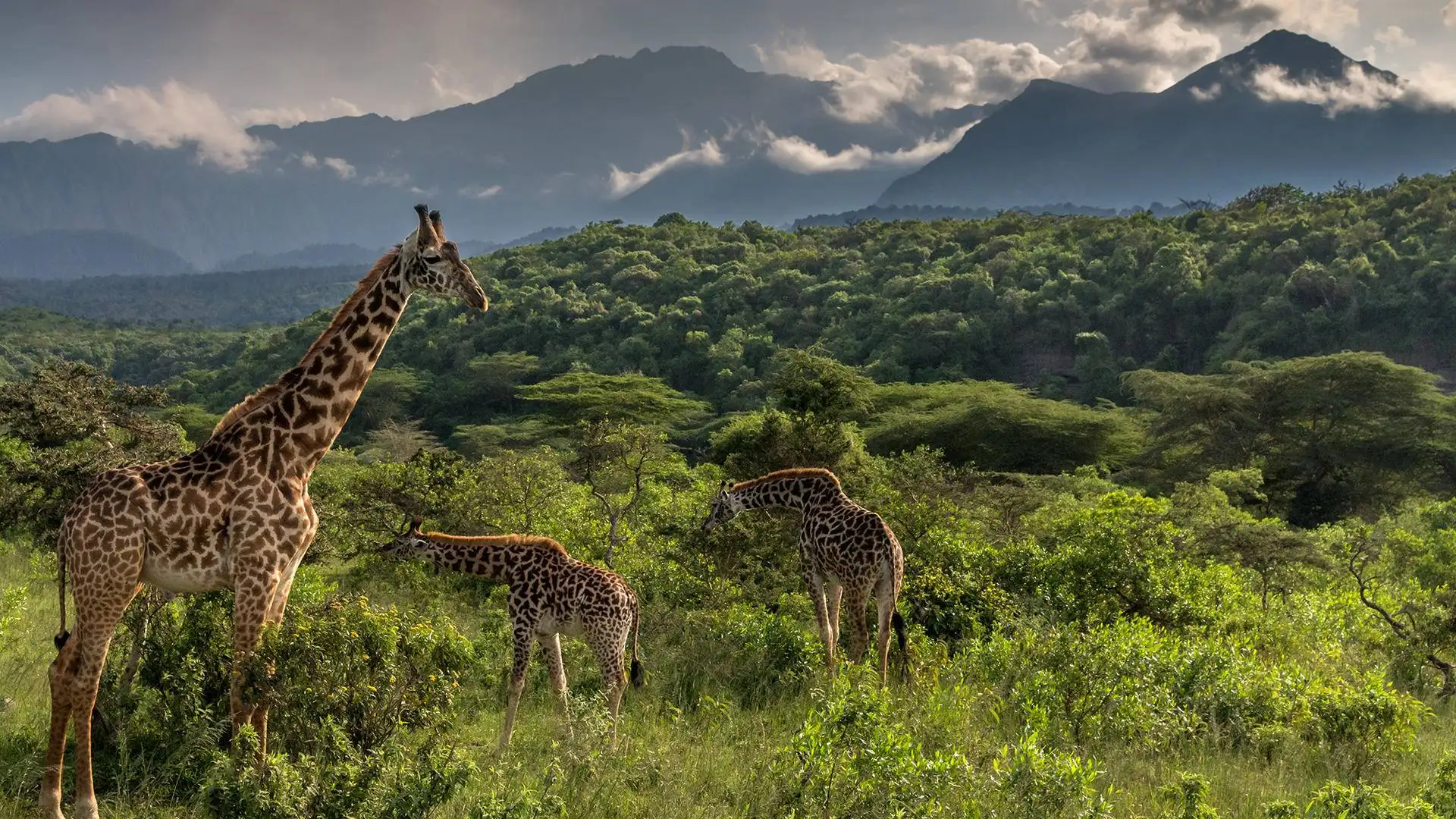
Arusha National Park
Welcome to a world of dramatic diversity. Arusha National Park is often called “Tanzania in Miniature” because it manages to pack almost every ecosystem found in the country—from lush rainforests and alpine moorlands to savannahs and alkaline lakes—into a compact and breathtaking landscape. Located just a 45-minute drive from Arusha city, it serves as the perfect gateway for your Tanzania Wildlife Safari. With Banana Africa Adventures, you will explore the emerald slopes of Mount Meru and the hidden depths of the Ngurdoto Crater with professional guides who prioritize your comfort and safety. Trust our local authority to deliver an intimate and authoritative encounter with the wild.
History and Facts about Arusha National Park
Despite its smaller size compared to its neighbors, Arusha National Park holds a significant place in the history of East African conservation.
- Establishment: The park’s origins date back to 1960 when it was founded as the Ngurdoto Crater National Park. It was expanded in 1967 to include Mount Meru and the Momella Lakes, at which point it was renamed Arusha National Park.
- Geological Origins: Much of the park’s landscape was shaped millions of years ago by the same tectonic forces that created the Great Rift Valley. Mount Meru, an active volcano, last erupted in 1910, leaving behind a horseshoe-shaped caldera that dominates the western horizon.
- Cultural Roots: The park and nearby city are named after the Waarusha people, an indigenous group that migrated to the slopes of Mount Meru centuries ago.
- UNESCO Recognition: As part of the UNESCO Man and the Biosphere Programme, the park is a critical water catchment area for the surrounding region and a sanctuary for endangered species.
Wildlife and Attractions in Arusha National Park
Arusha National Park offers a “boutique” safari experience, where rare primates and stunning geological features take center stage. Banana Africa Adventures ensures you don’t miss the hidden gems that make this park unique.
- Primate Paradise: This is the best place in Tanzania to spot the rare and beautiful Black-and-white Colobus Monkeys, often seen leaping through the canopy of the montane forest. You will also find blue monkeys and olive baboons.
- Tanzania’s Second Highest Peak: Mount Meru (4,566m) is a major attraction for trekkers. It offers spectacular views of Mount Kilimanjaro (just 60 km away) and serves as an excellent acclimatization hike.
- The “Little Ngorongoro”: The Ngurdoto Crater is a 3 km-wide volcanic caldera with steep walls and a swampy floor. It acts as a “reserve within a reserve,” housing buffaloes, elephants, and warthogs in a lush, secluded environment.
- Momella Lakes: A group of seven alkaline lakes, each with a different mineral composition, which attracts thousands of flamingos, pelicans, and waterbucks.
- The “Little Serengeti”: A section of open grassland within the park where you can enjoy classic sightings of giraffes (of which the park has one of the world’s largest populations), zebras, and buffaloes.
The Great Wildebeest Migration
While the world-famous Great Migration of 1.5 million animals primarily follows a clockwise loop through the Serengeti and Maasai Mara, Arusha National Park provides a vital context to this regional phenomenon.
- The Staging Point: For many travelers with Banana Africa Adventures, Arusha National Park is the first stop on a Northern Circuit safari. It allows you to see the resident species—like wildebeest, zebras, and gazelles—in a forested setting before following them to the vast open plains of the Serengeti.
- Ecological Contrast: Arusha serves as a permanent sanctuary. While the “Great Migration” is driven by a search for water, the groundwater and spring-fed lakes of Arusha provide a stable refuge for resident wildlife year-round.
- The Migration Backdrop: On clear days, the thundering plains of the southern Serengeti and Ngorongoro (where the migration begins) feel closer than ever as you gaze out from the slopes of Mount Meru.
- The Ultimate Safari Narrative: We use Arusha as the perfect “prologue” to the Great Migration, introducing you to the biodiversity of Tanzania in a quiet, intimate environment before you witness the “Greatest Show on Earth” in the distant north.