
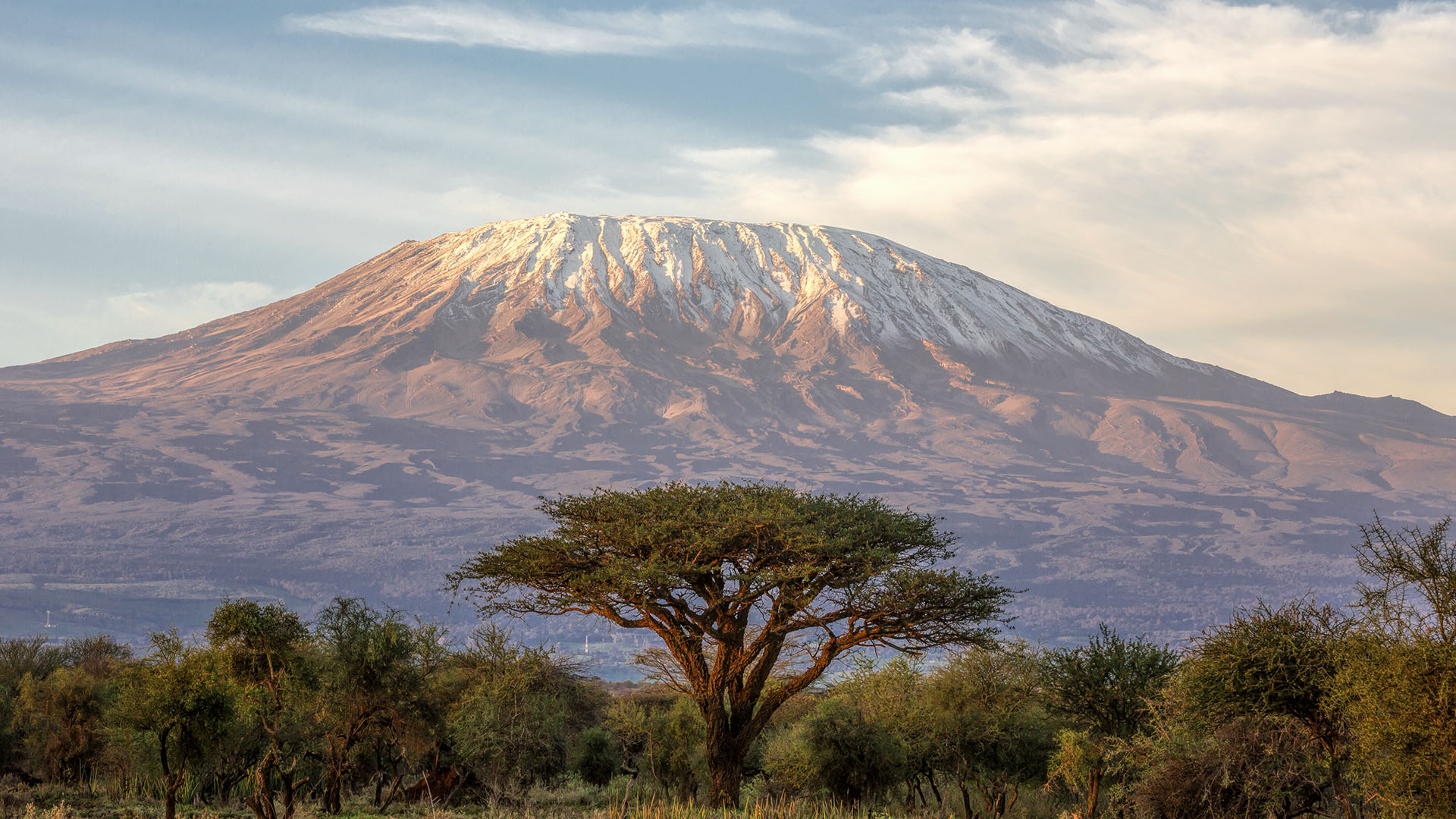
Amboseli National Park
Welcome to one of Kenya’s most iconic landscapes, where the world’s largest land mammals roam against the backdrop of the world’s tallest free-standing mountain. Amboseli National Park is a place of dramatic contrasts, from its parched dry lake beds to its lush, spring-fed swamps. At Banana Africa Adventures, we invite you to experience the park famously known as the best place in the world to get close to free-ranging elephants. With our professional guides and deep local authority, we ensure your journey to Amboseli is safe, insightful, and visually spectacular.
History and Facts about Amboseli National Park
Amboseli’s history is a story of ecological transformation and the enduring heritage of the Maasai people.
- The Name: “Amboseli” is derived from the Maasai word Empusel, which means “salty, dusty place”—a reference to the dry lake bed that dominates the horizon.
- Establishment: Originally set aside as the Southern Maasai Reserve in 1906, it was officially gazetted as a National Park in 1974 and declared a UNESCO Biosphere Reserve in 1991.
- Geology: The park covers roughly 392 $km^2$. It is characterized by an internal drainage system; the melting snows from Mt. Kilimanjaro filter through volcanic rock and rise to the surface as permanent swamps within the park.
- Scientific Legacy: Amboseli is home to one of the longest-running studies of elephants in the world, the Amboseli Elephant Research Project, which has been tracking the park’s families for over 50 years.
Wildlife and Attractions in Amboseli National Park
Amboseli offers a unique wildlife experience centered around its massive herds and the panoramic views of the “Roof of Africa.” Banana Africa Adventures ensures you are in the perfect position to capture these world-class sightings.
- The Land of Giants: The park is world-renowned for its Elephant bulls and families. Because they are habituated to vehicles and the landscape is open, you can enjoy some of the most intimate elephant encounters in Africa.
- The Big Five: While elephants are the stars, you can also spot Cape buffalo, lions, and leopards. While the rhino is absent, the density of other species is staggering.
- Observation Hill: This pyramid-shaped hill provides a panoramic view of the entire park, allowing you to look down over the swamps where hippos, buffaloes, and elephants congregate to cool off.
- Birding Hotspot: The park’s marshes are a haven for over 400 bird species, including kingfishers, pelicans, African skimmers, and many species of raptors.
- Cultural Visits: We offer professional visits to local Maasai Manyattas (villages), where you can experience the vibrant culture of the people who have lived in harmony with this ecosystem for centuries.
The Great Wildebeest Migration
While the thundering herds of the 1.5 million-strong migration are the hallmark of the Masai Mara and Serengeti, Amboseli National Park offers a different but vital perspective on the movement of East African wildlife.
- The Regional Migration: While it is not part of the “Great Migration” circuit, Amboseli has its own seasonal wildlife movements. During the dry season, animals migrate from the surrounding conservancies and the slopes of Mt. Kilimanjaro toward the park’s permanent swamps.
- The Scenic Backdrop: Many travelers with Banana Africa Adventures visit Amboseli to see the iconic species of the migration—zebras and wildebeest—framed by the snow-capped peaks of Mount Kilimanjaro.
- Ecological Refuge: Because of the permanent springs fed by mountain runoff, Amboseli serves as a critical refuge during droughts. While the Great Migration is a search for grass, the life in Amboseli is a celebration of water in a semi-arid land.
- The Ultimate Comparison: For the complete safari narrative, we often pair Amboseli with the Masai Mara. This allows you to compare the mass movement of the Great Migration with the stable, permanent majesty of Amboseli’s resident herds.