
Lake Naivasha National Park
Immerse yourself in the tranquil beauty of Lake Naivasha National Park, a stunning freshwater oasis perched at 1,884 meters above sea level in the Great Rift Valley. Known for its shimmering waters and yellow-fever tree forests, Naivasha offers a refreshing and intimate safari experience that prioritizes proximity to nature. At Banana Africa Adventures, we specialize in curating peaceful yet exhilarating excursions—from boat safaris among pods of hippos to walking alongside giraffes on Crescent Island. Trust our professional guides to provide an authoritative gateway to this serene sanctuary, just a short drive from Nairobi.
History and Facts about Lake Naivasha National Park
Lake Naivasha is a site of significant geographical and historical interest, serving as a vital ecosystem within Kenya’s highlands.
- The Name: Derived from the Maasai word ɛnaɨpɔ́sha, meaning “rough water” or “that which heaves,” a reference to the sudden storms that can stir the lake’s surface.
- Establishment & Status: The park was established in 1995, though the lake itself has been a protected Ramsar Wetland of International Importance since 1995. It spans approximately 140 $km^2$ of water and fringing woodland.
- Aviation History: Between 1937 and 1950, Lake Naivasha served as a landing site for the Imperial Airways flying boats on their route from Southampton to South Africa.
- Cultural Legacy: The shores of the lake have long inspired conservationists and artists, most notably Joy Adamson, author of Born Free, who lived at Elsamere on the lake’s southern banks.
- Geology: The lake has no visible outlet, leading scientists to believe it has a subterranean outflow that keeps its waters fresh despite its location in a volcanic basin.
Wildlife and Attractions in Lake Naivasha National Park
Lake Naivasha is unique for its lack of large predators, allowing for rare and safe “walking safaris” amidst iconic African wildlife. Banana Africa Adventures ensures you experience the very best of this diverse habitat.
- Crescent Island Sanctuary: Often called “Kenya’s best-kept secret,” this peninsula allows you to walk among giraffes, zebras, wildebeests, and waterbucks without the confinement of a vehicle.
- Hippo Capital: The lake is home to over 1,500 hippos. Boat safaris offer a professional and safe way to view these massive herbivores as they lounge in the shallows during the day.
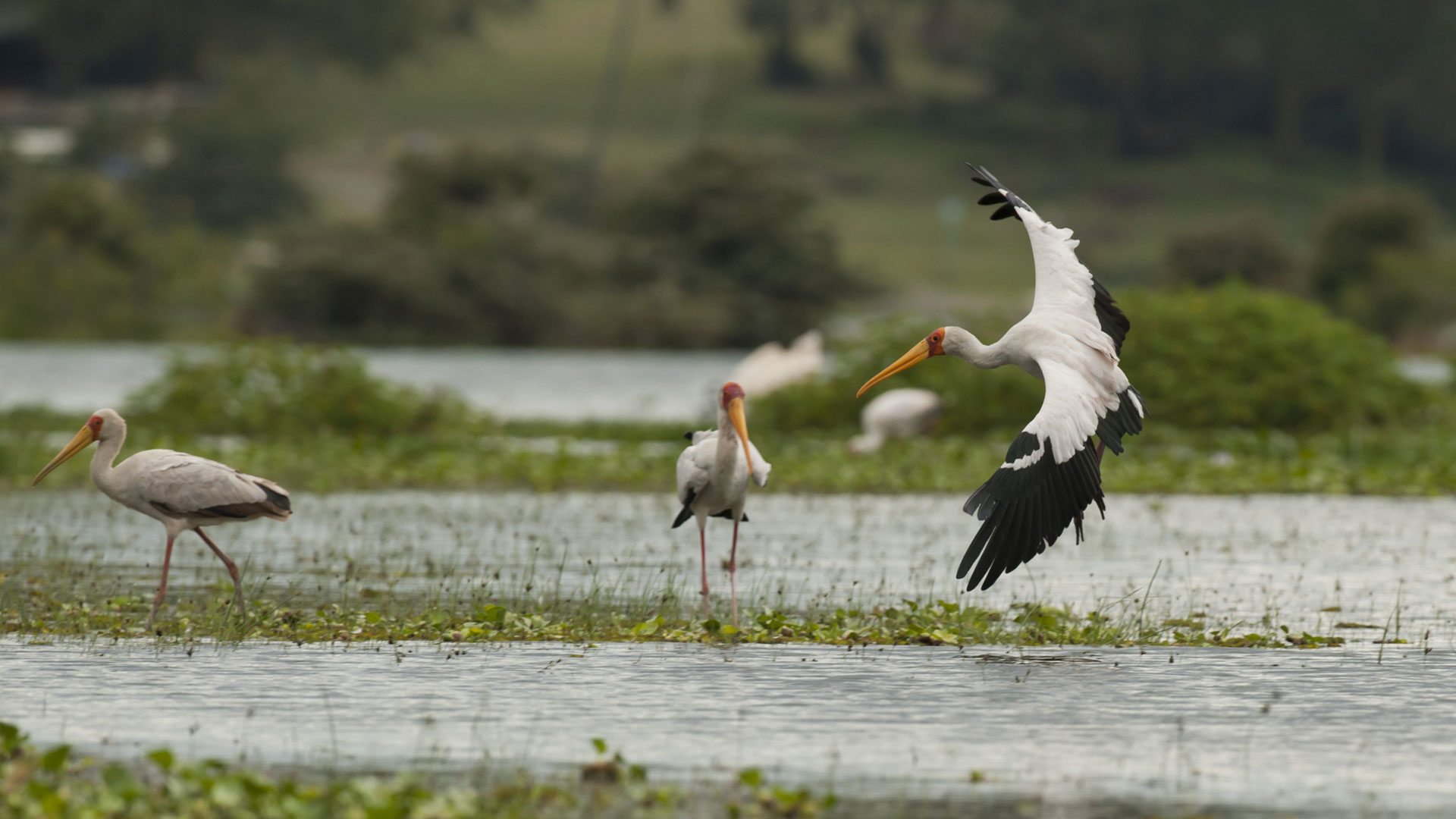
- A Birder’s Paradise: With over 400 bird species, the park is a premier birdwatching destination. Look for the African Fish Eagle, Goliath Herons, and the bright pink flashes of flamingos in the nearby Oloiden Lake.
- Surrounding Wonders: The park serves as a hub for nearby attractions, including the dramatic cliffs of Hell’s Gate National Park and the challenging hike up the extinct Mount Longonot volcano.
- Flora: The iconic Yellow-fever trees (Acacia xanthophloea) line the shores, providing a hauntingly beautiful backdrop and essential habitat for the park’s primate populations.
The Great Wildebeest Migration
While the thundering “Great Migration” is the main event of the Masai Mara, Lake Naivasha National Park acts as a tranquil and essential sanctuary within the broader migratory circuit.
- The Transit Sanctuary: For travelers with Banana Africa Adventures, Lake Naivasha is a vital stop between the high-octane river crossings of the Mara and the dusty plains of Amboseli. It offers a “peaceful migration” experience where resident wildebeest herds can be seen year-round.
- Ecological Contrast: Unlike the 1.5 million animals constantly on the move in the Serengeti, the wildebeest at Naivasha have found a permanent home in the lush, water-rich environment of the Rift Valley.
- The “Quiet” Migration: Visitors can witness the species of the Great Migration—zebras, gazelles, and wildebeests—in a quiet, forested setting, providing a perfect “prologue” or “epilogue” to the drama of the Mara.
- Water Lifeline: The permanent freshwater of Naivasha provides a stable ecosystem that contrasts with the seasonal struggle for water that defines the Great Migration, showcasing the diversity of survival strategies in the African wild.