
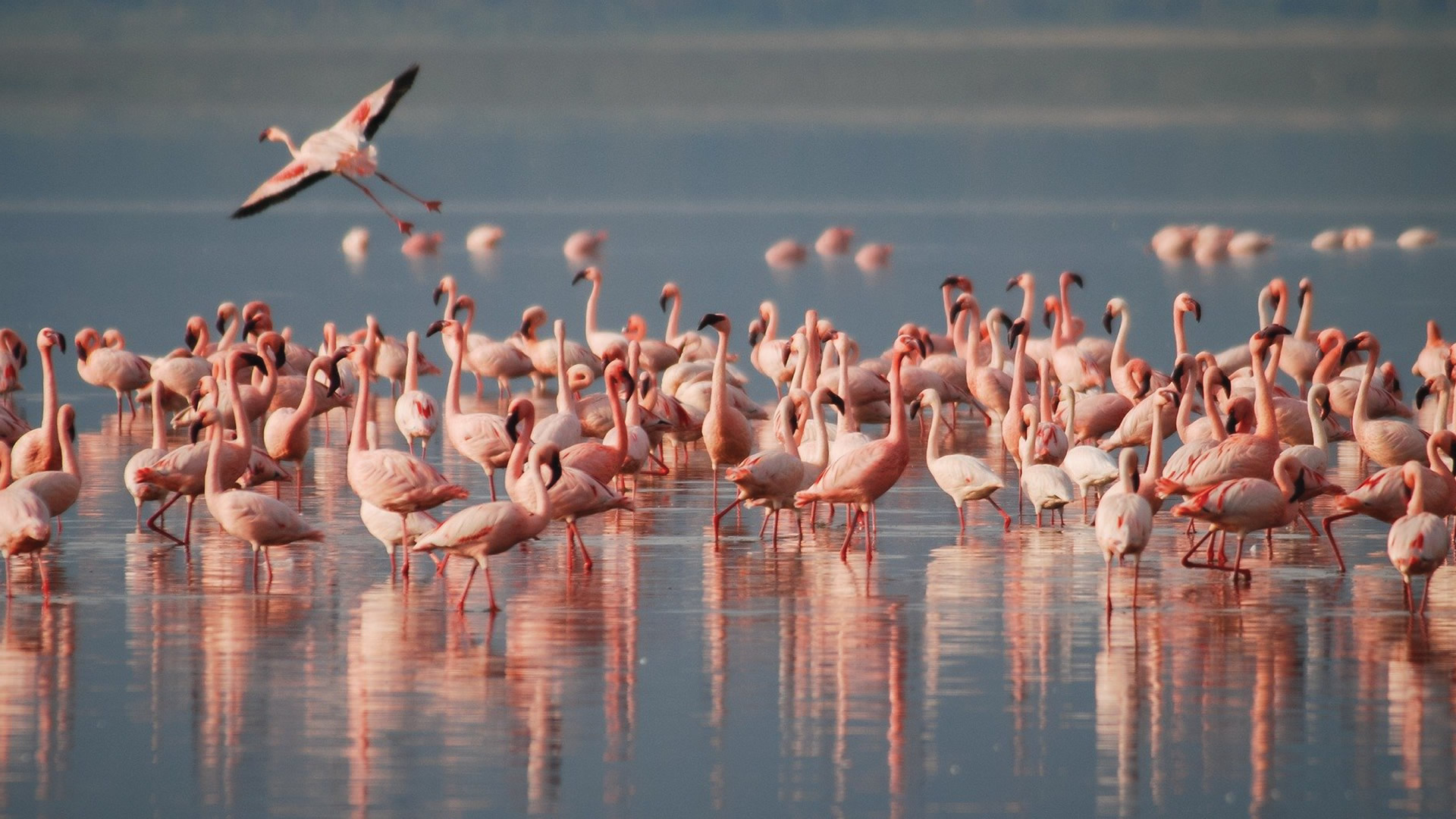
Lake Nakuru National Park
Welcome to a world of vibrant colors and sanctuary. Lake Nakuru National Park is one of Kenya’s most famous premium parks, nestled in the heart of the Great Rift Valley. Renowned for its shimmering pink shores and its critical role in rhinoceros conservation, Lake Nakuru offers a safari experience that is both visually stunning and ecologically vital. At Banana Africa Adventures, we invite you to explore this UNESCO World Heritage site, where rocky escarpments meet acacia woodlands and soda-rich waters. With our professional guides and authoritative knowledge of the Rift Valley, we guarantee an intimate and expertly curated encounter with Kenya’s most precious wildlife.
History and Facts about Lake Nakuru National Park
Lake Nakuru’s history is a testament to Kenya’s pioneering spirit in bird and rhinoceros conservation.
- Establishment: The area was first protected as a bird sanctuary in 1961 before being officially elevated to National Park status in 1968.
- UNESCO World Heritage: It is part of the “Kenya Lake System in the Great Rift Valley,” a UNESCO World Heritage site recognized for its outstanding natural beauty and ecological importance.
- The Name: “Nakuru” is derived from the Maasai word meaning “Dusty Place,” though the park itself is a lush oasis of yellow-fever trees and marshes.
- Rhino Stronghold: In 1984, Lake Nakuru was established as the first government-managed Rhino Sanctuary in Kenya. A high-security electric fence was constructed to protect these endangered animals from poaching, a model that has since been replicated across Africa.
- Geology: The park surrounds a shallow, strongly alkaline lake that fluctuates in size between 5 and 45 $km^2$ depending on seasonal rainfall.
Wildlife and Attractions in Lake Nakuru National Park
While famous for its avian displays, Lake Nakuru is a powerhouse for “Big Five” sightings and rare mammals. Banana Africa Adventures ensures you experience the full diversity of this compact paradise.
- Rhino Capital: This is one of the best places in East Africa to see both Black and White Rhinoceros. The park’s successful breeding programs make sightings of these prehistoric giants almost guaranteed.
- The Rothschild’s Giraffe: The park is a sanctuary for the endangered Rothschild’s Giraffe, which was introduced here to ensure the survival of the species.
- Predators and Plains Game: Witness healthy populations of lions and the notoriously elusive leopards, which are frequently spotted resting in the yellow-fever trees. You will also encounter large herds of Cape buffalo and waterbuck.
- A Birder’s Dream: While the lake’s flamingo populations fluctuate with water levels, it remains a haven for over 450 bird species, including Great White Pelicans, African Fish Eagles, and Verreaux’s Eagles.
- Scenic Viewpoints: “Baboon Cliff” and “Out of Africa” lookout points offer breathtaking panoramic views of the lake and the surrounding Rift Valley escarpment.
The Great Wildebeest Migration
While Lake Nakuru is not a direct path for the 1.5 million animals involved in the thundering Great Migration, it serves as a critical and luxurious stopover for travelers on the “Migration Circuit.”
- The Strategic Link: Most travelers with Banana Africa Adventures visit Lake Nakuru as they journey between the Amboseli/Samburu regions and the Masai Mara. It provides a distinct ecological contrast to the open savannahs where the migration takes place.
- Resident Migrants: While the “Great Migration” is a search for grass, Lake Nakuru’s wildlife—including its own resident populations of wildebeest and zebra—relies on the permanent water sources and lush grazing lands provided by the lake’s ecosystem.
- Ecological Refuge: During the height of the dry season, when the migratory herds are battling the elements in the Mara, Lake Nakuru remains a stable sanctuary for biodiversity, offering a “quieter” but equally rich wildlife narrative.
- The Ultimate Safari Narrative: We pair Lake Nakuru with the Masai Mara to give you a complete picture of Kenya. Witness the raw survival of the Great Migration in the Mara, and then experience the successful, high-stakes conservation of the Rhino in Nakuru.