
Mkomazi National Park
Welcome to one of Tanzania’s most unique and tranquil wildernesses. Mkomazi National Park is a breathtaking hidden gem in the shadow of the Pare and Usambara Mountains. Often overlooked by the mainstream crowds, Mkomazi offers a serene and exclusive safari experience that focuses on rare species and pioneering conservation. At Banana Africa Adventures, we invite you to discover this “Home of the Black Rhino,” where the rugged landscape and semi-arid savannah provide a starkly beautiful backdrop for adventure. Trust our professional guides to lead you through this conservation success story, where the silence of the bush is broken only by the call of rare birds and the thrum of nature.
History and Facts about Mkomazi National Park
Mkomazi’s history is a powerful narrative of neglect followed by a spectacular ecological recovery, making it a symbol of Tanzanian conservation resilience.
- Establishment: Originally established as a Game Reserve in 1951, it was officially elevated to National Park status in 2006, recognizing its successful rehabilitation.
- The Rehabilitation Story: In the late 1980s, the park was on the brink of disaster due to overgrazing and poaching. Collaborative efforts between the Tanzanian government and the George Adamson Wildlife Preservation Trust transformed it into one of the most well-equipped parks in East Africa.
- The Name: The name “Mkomazi” comes from the Pare ethnic group’s word for “a scoop of water,” referring to the scarce but vital water sources in this semi-arid environment.
- Scale and Location: Covering roughly 3,234 $km^2$, Mkomazi shares its northern border with Kenya’s Tsavo West National Park, forming a vital trans-boundary ecosystem for migratory elephants and oryx.
Wildlife and Attractions in Mkomazi National Park
Mkomazi is not your typical Big Five destination; instead, it is a haven for rare and endangered species that are difficult to find elsewhere. Banana Africa Adventures takes you to the front lines of wildlife preservation in this stunning park.
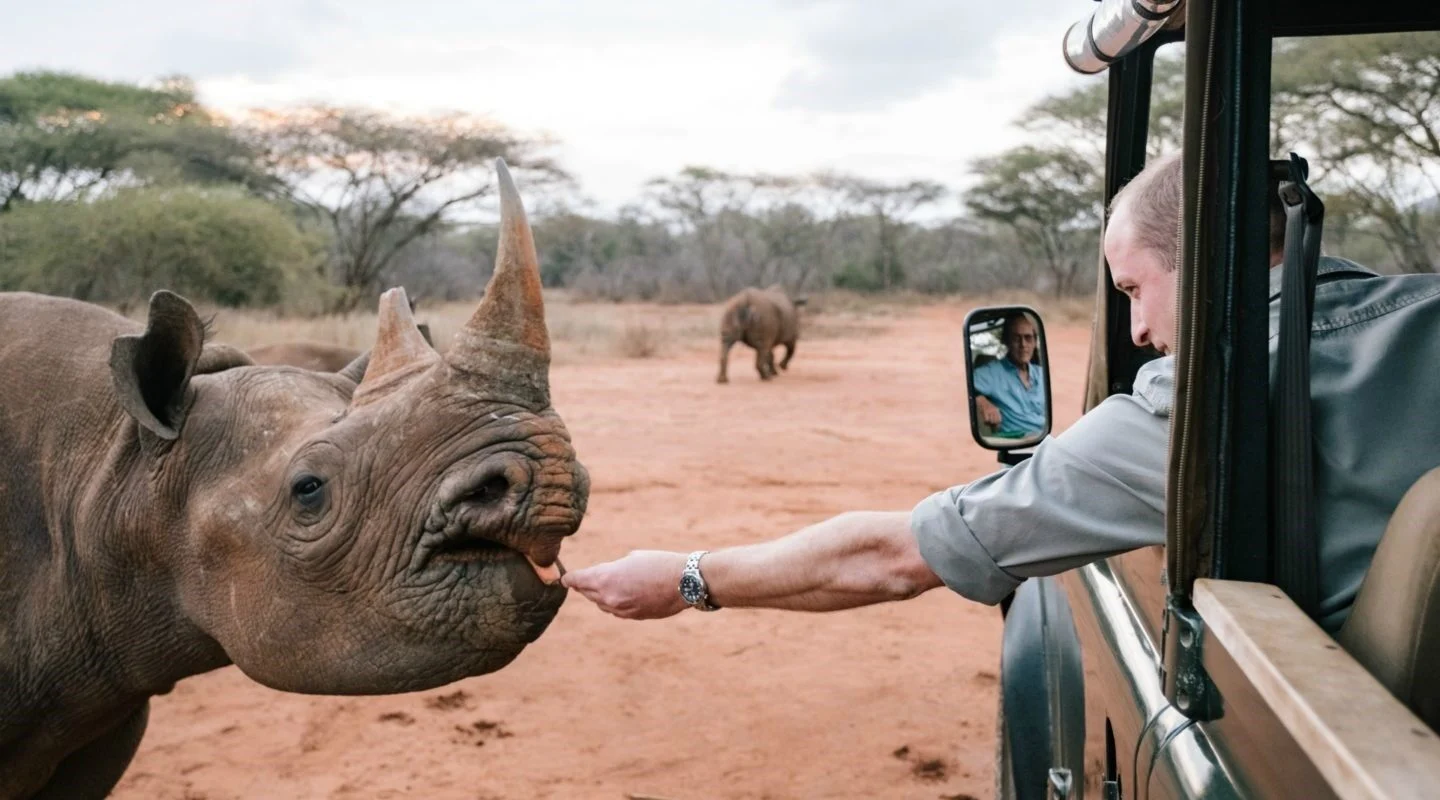
- The Mkomazi Rhino Sanctuary: This world-famous sanctuary is a stronghold for the endangered Black Rhinoceros. Here, visitors have a rare and professional opportunity to see these prehistoric giants in a highly protected environment.
- African Wild Dog Program: Mkomazi is a leader in the conservation of the African Wild Dog (Painted Dog). The park’s breeding and reintroduction program has been instrumental in saving these social and endangered predators.
- Specialist Species: Look for the “Mkomazi Specials”—the Gerenuk (long-necked antelope), the Lesser Kudu, and the Fringe-eared Oryx, all of which are perfectly adapted to the dry savannah.
- Avian Diversity: With over 450 bird species, it is a paradise for birders. You can spot the striking vulturine guinea fowl, ostriches, and various migratory birds that frequent the acacia woodlands.
The Great Wildebeest Migration
While the world-famous Great Migration of 1.5 million animals is the hallmark of the Serengeti ecosystem, Mkomazi National Park offers an important look at a different kind of regional movement.
- The Tsavo Connection: Although the Serengeti migration does not pass through Mkomazi, the park is a key part of the Tsavo-Mkomazi ecosystem. This allows for a localized migration where large herds of elephants, zebras, and oryx move between Tanzania and Kenya based on seasonal rainfall.
- A Permanent Refuge: Because Mkomazi is drier than the Serengeti, its water sources—like the Dindira Dam—serve as a permanent refuge for resident wildlife. While the “Great Migration” is a search for green grass, Mkomazi’s wildlife represents the strength of survival in an arid land.
- The “Quiet” Migration: For many travelers with Banana Africa Adventures, Mkomazi provides a professional alternative to the crowded migration routes. Here, you can witness the natural movement of wildlife across borders without the congestion of hundreds of safari vehicles.
- An Ecological Narrative: We use Mkomazi to round out your Tanzanian story. While the Great Migration showcases the spectacle of the mass movement, Mkomazi showcases the precision of conservation and the survival of species that don’t follow the thundering herds.