
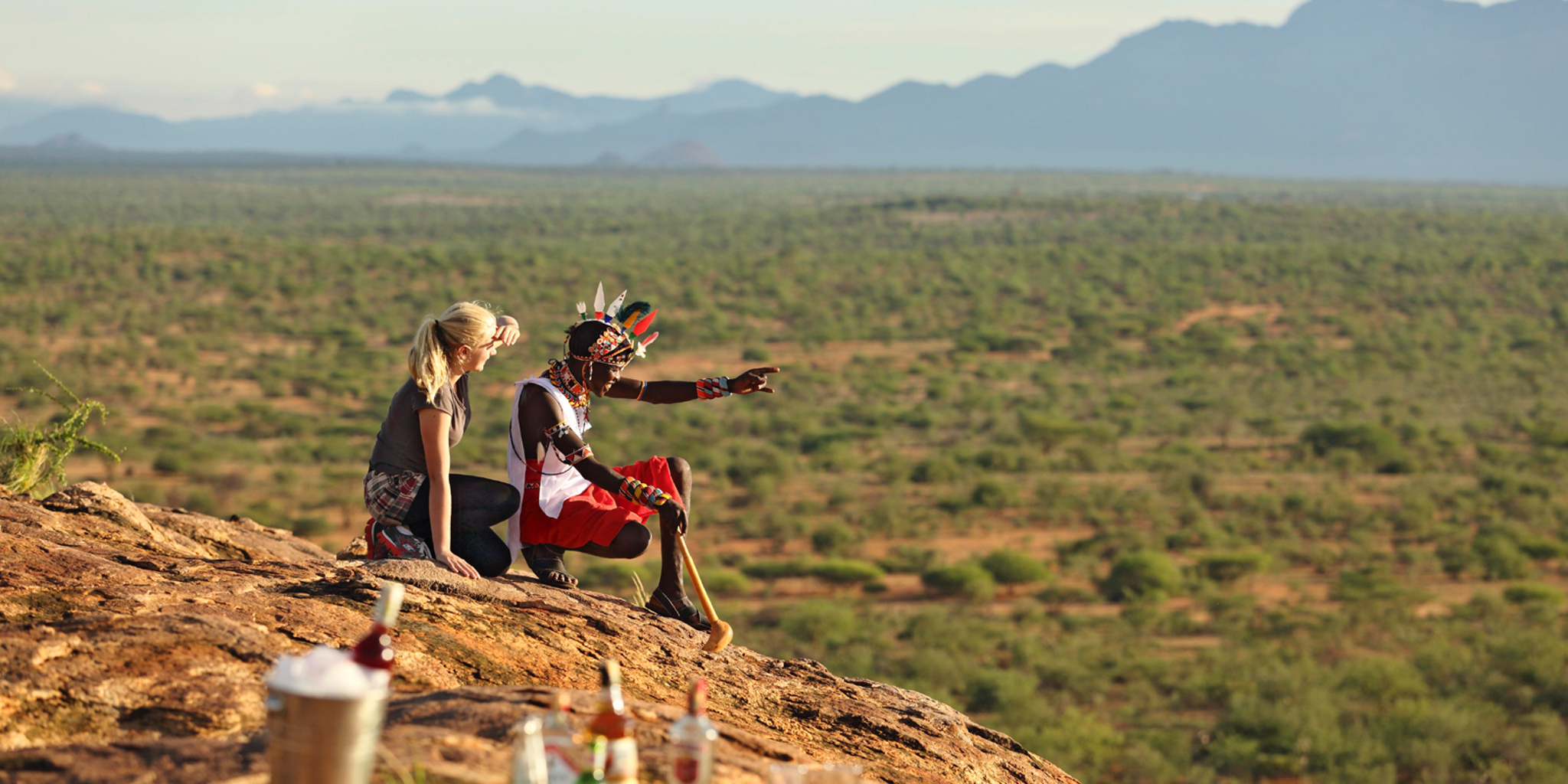
Samburu National Reserve
Venture into the heart of Kenya’s arid north, a landscape of stark beauty and rare treasures. Samburu National Reserve is a world apart from the lush southern plains, defined by red sands, doum palms, and the life-giving Ewaso Ng’iro River. At Banana Africa Adventures, we invite you to discover the “Special Five”—species found only in this rugged ecosystem—and immerse yourself in the vibrant culture of the Samburu people. With our expert guides and professional service, you’ll experience a side of Africa that is raw, authentic, and utterly captivating.
History and Facts about Samburu National Reserve
Samburu is a place where ancient traditions meet a pioneering spirit of conservation.
- Establishment: The reserve was officially established in 1962, having previously been part of the larger Marsabit National Reserve. It covers approximately 165 $km^2$ of pristine wilderness.
- The Living River: The Ewaso Ng’iro River is the park’s primary lifeline. Its name means “Brown Water” in the local language, and it provides a permanent water source that draws wildlife from across the parched northern plains.
- A Cultural Legacy: The reserve is named after the Samburu people, semi-nomadic pastoralists closely related to the Maasai. They have coexisted with the wildlife here for centuries and continue to manage the land through community-led conservation.
- Conservation History: Samburu is famously one of the areas where Joy and George Adamson raised Elsa the Lioness, whose story was immortalized in the book and film Born Free. It is also home to the legendary lioness Kamunyak, who gained worldwide fame for adopting oryx calves.
Wildlife and Attractions in Samburu National Reserve
Samburu offers a unique “Special Five” safari, showcasing species adapted specifically to this semi-arid environment. Banana Africa Adventures takes you beyond the standard Big Five to see the rare gems of the north.
- The Samburu Special Five: This is the only place to see all five rare species in one habitat: the Grevy’s Zebra (with its thin, pinstripe pattern), the Reticulated Giraffe (with its stunning geometric coat), the Gerenuk (the long-necked gazelle that stands on its hind legs), the Beisa Oryx, and the Somali Ostrich.
- Big Cat Stronghold: The reserve is one of the best locations in Kenya to spot Leopards, which are often seen lounging in the acacias along the river. You will also find healthy populations of lions and cheetahs.
- Elephant Sanctuary: Home to over 900 elephants, Samburu offers incredible sightings as large herds gather at the riverbanks to drink and bathe.
- Birding Excellence: With over 450 bird species, the park is a paradise for birders, featuring everything from the vibrant vulturine guinea fowl to the rare Taita falcon.
- Cultural Immersion: We offer professional visits to Samburu Manyattas (villages), providing an authoritative and respectful look into the traditional lives, dances, and vibrant beadwork of the Samburu warriors.
The Great Wildebeest Migration
While the thundering 1.5 million-strong migration is the hallmark of the Masai Mara and Serengeti, Samburu National Reserve offers a distinct and essential contrast to the southern migratory circuit.
- The Northern Sanctuary: Samburu is not on the path of the “Great Migration.” Instead, it provides a permanent sanctuary for resident wildlife. While the herds in the south are constantly moving in search of water, the life in Samburu is anchored to the permanent waters of the Ewaso Ng’iro.
- A Distinct Narrative: Many travelers with Banana Africa Adventures choose Samburu as a “prologue” or “epilogue” to a migration safari. It allows you to see rare species that never participate in the migration, providing a more diverse understanding of Africa’s biodiversity.
- Ecological Contrast: While the Great Migration showcases the spectacle of mass movement, Samburu showcases the precision of adaptation. Here, you witness how species survive and thrive in a harsh, dry landscape without needing to travel hundreds of miles.
- The Strategic Circuit: We often pair Samburu with the Masai Mara. This allows you to experience the raw drama of the Great Migration and then transition to the quiet, ancient majesty of the north to see the unique species found nowhere else.