
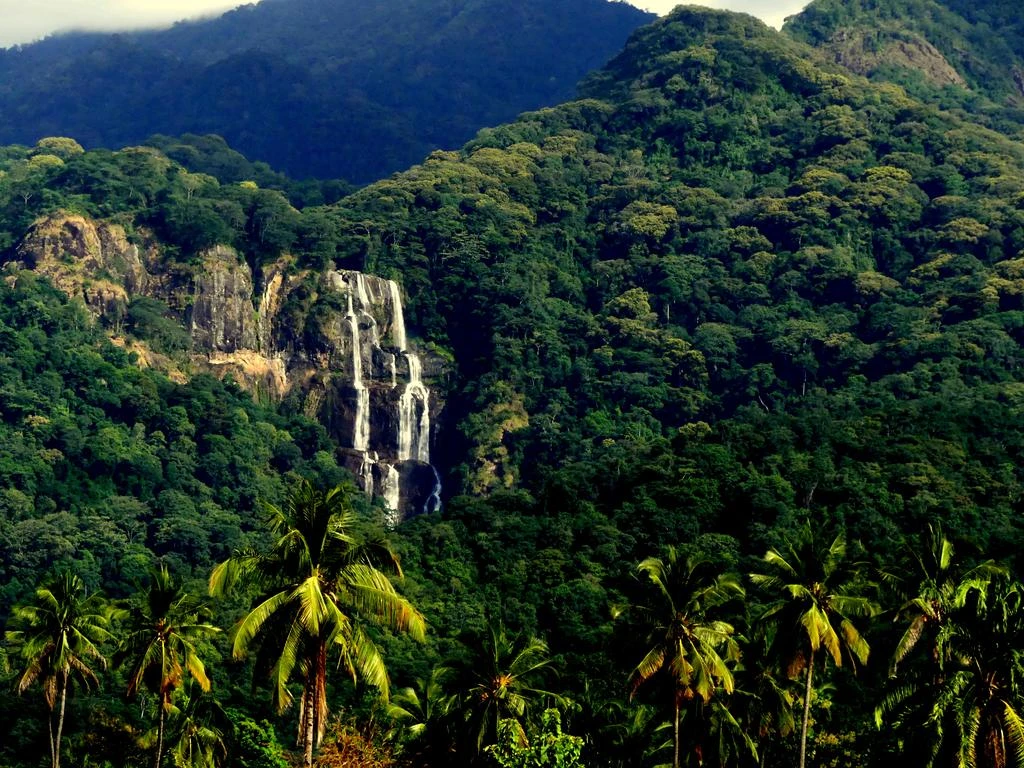
Udzungwa Mountains National Park
Step into an ancient world of mist-covered peaks and emerald forests. Udzungwa Mountains National Park is not your typical savannah safari; it is a world-renowned biodiversity hotspot and a premier destination for hiking and primate trekking. As part of the Eastern Arc Mountains, these “islands” of forest have evolved in isolation for over 30 million years, earning the park the title “The Galapagos of Africa.” At Banana Africa Adventures, we invite you to trade the safari vehicle for hiking boots and explore a vertical paradise of hidden waterfalls and endemic treasures. Trust our local authority to guide you through this lush sanctuary with professional care and deep ecological insight.
History and Facts about Udzungwa Mountains National Park
The Udzungwa Mountains are a biological time capsule, preserving a lineage of flora and fauna that has remained nearly untouched for millions of years.
- Establishment: The park was officially gazetted in 1992 and inaugurated by Prince Bernhard of the Netherlands, the founder of the WWF. It was formed to protect five forest reserves established in the 1950s.
- Ancient Origins: It is believed that these forests have survived for over 30 million years and were once part of a vast forest belt that stretched across the Congo Basin.
- The Name: “Udzungwa” is derived from the Kihehe word Wadzungwa, referring to the “people who live on the sides of the mountains.”
- Global Importance: Covering 1,990 $km^2$, the park is one of only 34 “World Biodiversity Hotspots” and is of global critical importance for its high levels of endemism.
- Vertical Range: The park’s altitude ranges dramatically from 250 meters to the peak of Luhomero at 2,576 meters, creating a variety of distinct climate zones.
Wildlife and Attractions in Udzungwa Mountains National Park
Udzungwa is a “Primate Park” and a botanical treasure trove, offering a completely different wildlife experience than the open plains. Banana Africa Adventures takes you beyond the Big Five to discover species found nowhere else on Earth.
- Primate Paradise: The park hosts 12 different primate species, more than any other park in Tanzania. This includes two endemics: the Iringa Red Colobus and the Sanje Crested Mangabey, which was only discovered by scientists in 1979.
- Sanje Waterfalls: The park’s most iconic attraction, these spectacular falls drop 170 meters through the forest canopy into a natural pool perfect for a refreshing swim after a hike.
- Endemic Birdlife: Ranked among the top ten most important bird conservation areas in Africa, the park is home to over 400 species, including the endemic Udzungwa Forest Partridge and the Rufous-winged Sunbird.
- The “Little Things”: Discover a world of endemic chameleons, such as the bearded pygmy chameleon, and over 250 species of butterflies, many of which are unique to these mountains.
- Forest Giants: While primarily a hiking destination, the western side of the park still supports larger mammals including elephants, buffaloes, leopards, and sables.
The Great Wildebeest Migration
While the thundering Great Migration is a spectacle of the northern savannahs, Udzungwa Mountains National Park serves as the ultimate “Green Sentinel” in the southern circuit, offering a vital ecological contrast.
- The Permanent Sanctuary: Unlike the migratory wildebeest that must travel 800 km for water, Udzungwa is a land of permanent rivers and springs. It serves as a vital water catchment area that feeds the Great Kilombero Valley below.
- Ecological Contrast: Many travelers with Banana Africa Adventures choose Udzungwa as a serene, forested alternative to the high-energy migration safaris. It represents the “Ancient Africa” that existed long before the modern savannahs were formed.
- The Vertical Migration: While wildebeest migrate horizontally across the plains, species in Udzungwa undergo “altitudinal migrations,” moving up and down the mountain slopes depending on fruiting seasons and rainfall.
- A Complete Tanzanian Narrative: We integrate Udzungwa into your itinerary to show the full spectrum of Tanzania—from the 1.5 million migrating animals of the Serengeti to the silent, ancient endemism of the Eastern Arc Mountains.